Ads

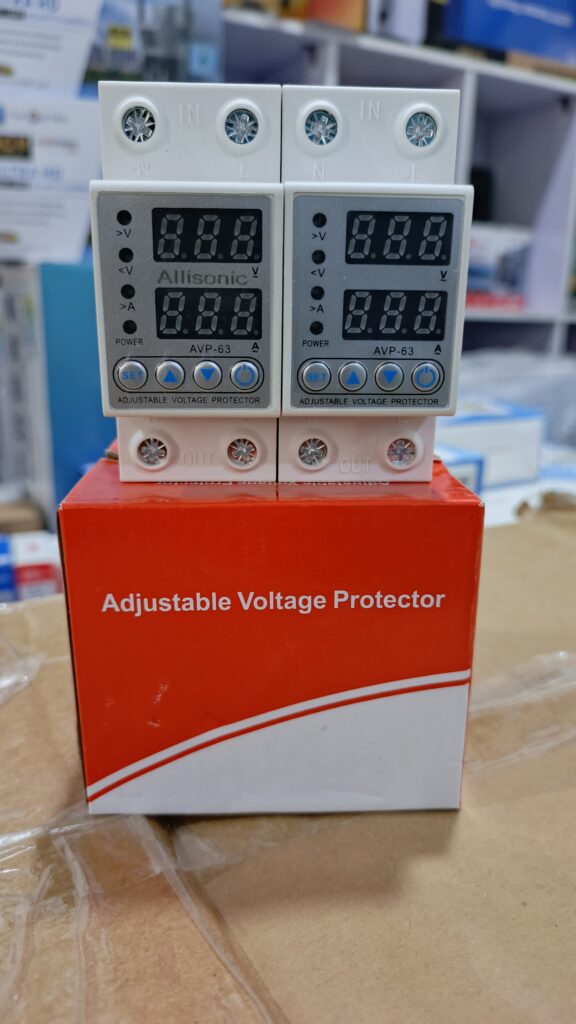
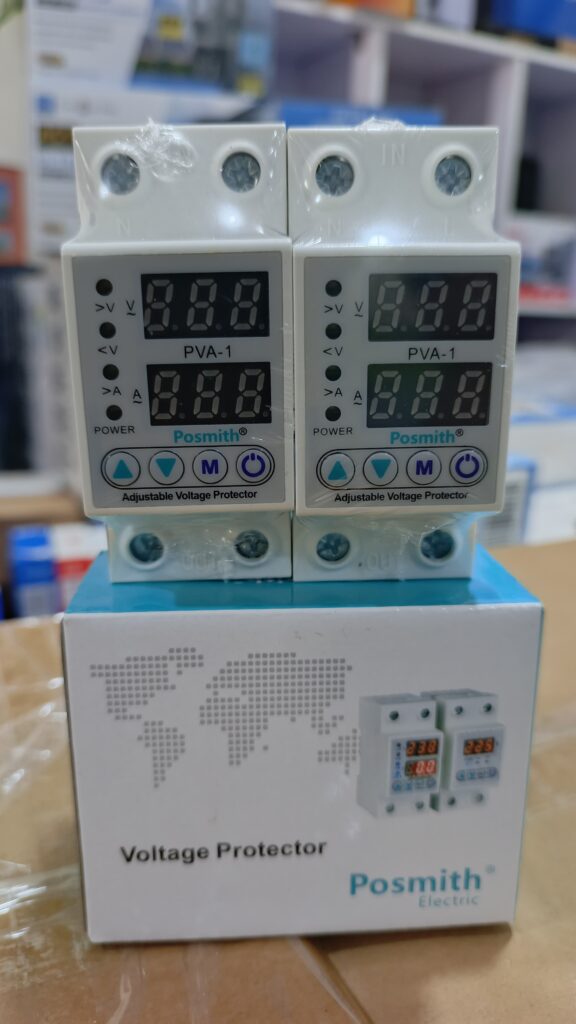
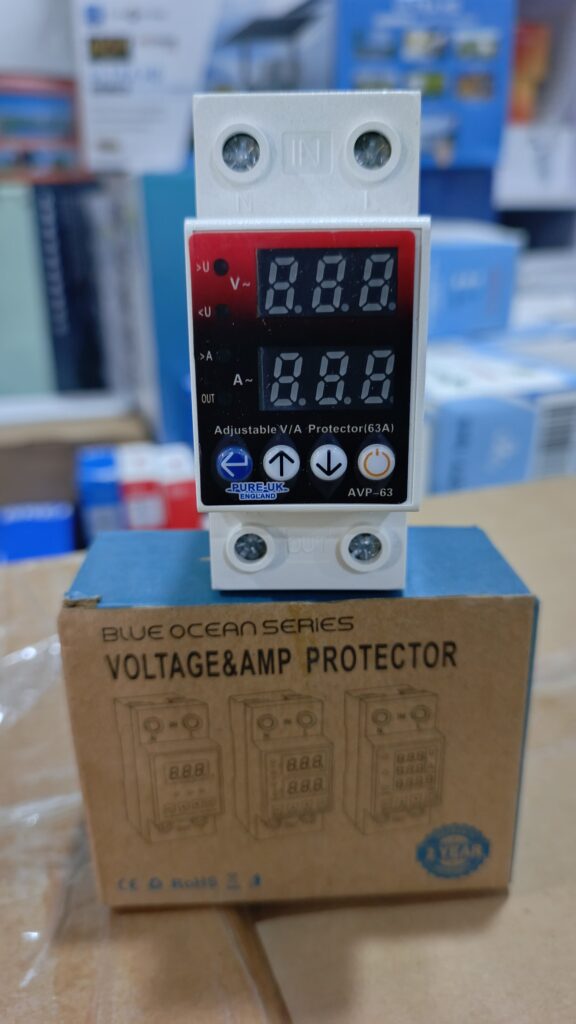
Adjustable Voltage Protector (AVR)

Adjustable Voltage Protector (AVR)

₦10,000

₦15,000

Negotiable

You save ₦5,000

Delivery

Estimated delivery time 1-9 business days

Seller Information

Is NEPA voltage fluctuating? This device is your answer:
 
Tired of NEPA high voltage burning your appliances?   
One surge and your solar Inverter is gone… 

Contact the Seller to Place Your Order Now

How to Place Your Order:

https://odsmarket.com.ng/

Official Stock

Is NEPA voltage fluctuating? This device is your answer:
 
Tired of NEPA high voltage burning your appliances?   
One surge and your solar Inverter is gone… 
Is NEPA voltage fluctuating? This device is your answer:
 
Tired of NEPA high voltage burning your appliances?   
One surge and your solar Inverter is gone… 
 
✓ Over Voltage: Cuts @ 270V+  
✓ Under Voltage: Cuts @ 170V-  
✓ Auto Reset when power is stable  
✓ 63A Max Load – powers your whole house  
✓ For Fridge, AC, TV, Freezer, Inverter

P-setting means + recommended values for Nigeria NEPA

VOLTAGE PROTECTION – Most important for NEPA
 
P-1: Power-on time = 5s  
Delay before protector turns on after power comes.  
Recommended: 5-30s. 30s is safer for AC/compressor to avoid quick on/off.
 
P-2: Recovery time = 30s  
Wait time after trip before power returns.  
Recommended: 30-120s. Use 60s+ for fridges/AC. Prevents compressor damage.
 
P-3: Over voltage = 270V  
If NEPA > 270V, it cuts power.  
Recommended: 265V-275V. 270V is perfect. NEPA sometimes gives 280V+ which kills appliances.
 
P-4: Over voltage recovery = 265V  
Power returns when voltage drops back to 265V.  
Recommended: 260V-265V. Must be 5V below P-3.
 
P-5: Under voltage = 170V  
If NEPA < 170V, it cuts power.  
Recommended: 170V-180V. 170V is ok. Below 170V your fridge/AC won’t start well + draws high current.
 
P-6: Under voltage recovery = 175V  
Power returns when voltage rises to 175V.  
Recommended: 175V-185V. Must be 5V above P-5.
 
P-7: Voltage trip time = 0.5s  
How fast it cuts when voltage goes bad.  
Recommended: 0.5s-1s. 0.5s is good for fast protection.
 
P-8: Voltage adjustment = Real-time  
Calibration. Don’t touch unless your display voltage is wrong vs multimeter.  
*Recommended: Leave at 0%* unless tested.
 
CURRENT/LOAD PROTECTION
 
P-9: Over current = 63A  
Max current before trip. Depends on your breaker size.  
Recommended: Match your main breaker. If you have 63A breaker, use 63A. If 40A, use 40A. If 100A, use 100A.
 
P-10: Current trip time = 10s  
Delay before it trips on overload.  
Recommended: 5s-10s. 10s allows AC/fridge startup surge.
 
P-11: Current counter = OFF  
Counts how many times overload happened.  
Recommended: OFF unless you want to track overloads.
 
P-12: Current adjustment = Real-time  
Calibration for current reading.  
Recommended: Leave at 0%
 
OTHER SETTINGS
 
P-13: Frequency adjustment = Real-time  
NEPA frequency is 50Hz. Do not modify.  
Recommended: Leave as is
 
P-14: Fast power down protection = ON  
Cuts power instantly if voltage drops very fast.  
Recommended: ON – good protection
 
P-15: Display mode = 1  
1=Standard voltage/current, 2=Manual, 3=Auto cycle  
Recommended: 1 Standard for daily use
 
P-16: Automatic reset = ON  
After trip + recovery time, it will auto restore power.  
Recommended: ON – so you don’t need to reset manually when NEPA returns
 
P-17: Action = ON  
Main switch for protector function.  
Recommended: ON always
 
P-18: Energy conserving = OFF  
Powers off display to save energy. Recommended: OFF – you want to see voltage always
 
P-19: Lock = 112  
Password to lock settings so children/clients can’t change it.  
Recommended: Set your own code like 123 or 258. Default 112 is known.

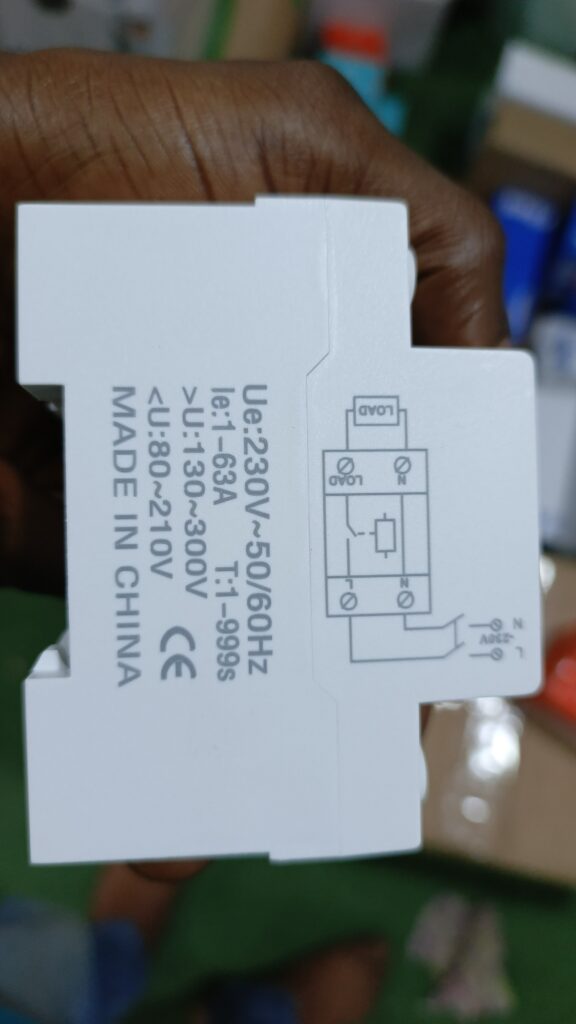
device label:

Ue: 230V~50/60Hz  
Ie: 1-63A  
T:1~999s
<U: 80~210V  
>U: 130~300V 
 
Explanation of the specs:
– Ue: 230V∼50/60Hz = Rated operating voltage: 230V AC, 50/60Hz. For Nigeria NEPA/PHCN 220V-240V supply.
– Ie: 1-63A = Rated current range: 1A to 63A. This is the max load it can protect.
– <U: 80∼210V = Under-voltage protection range: adjustable from 80V to 210V. Cuts off if voltage drops below set value.
– >U: 130∼300V = Over-voltage protection range: adjustable from 130V to 300V. Cuts off if voltage goes above set value.

Function setting

Adjustable Voltage Protector (AVR)
220 Display voltage
↓ Click SET to set
 
dL- Power-on delay time
1-300S
↓ SET
 
UP- Over-voltage protection value
230-300/oFF
▲▼ Click SET to set
 
Lo- Under-voltage protection value
210-140/oFF
▲▼ Click SET to set
 
Ut- Voltage protection action time
0.1-30S
▲▼ Click SET to set
 
PC- Over-current protection value
1-40/63/80A
▲▼ Click SET to set
 
Ct- Over-current protection action time
0.1-30S
▲▼ Click SET to set
 
CC- Continuous overcurrent protect times
A01-A20/oFF
▲▼ Click SET to set
 
AL- Recovery delay time
1-600S
▲▼ Click SET to set
 
↓ SET
Long press SET for 5 seconds to save
 
Quick notes:
1. Use ▲▼ buttons to change values, SET button to move to next setting
2. “oFF” means you can disable that protection if you don’t want it
3. Always long press SET 5s at the end to save all changes, else it won’t save

Warranty Term

No product review yet. Be the first to review this product.

Similar Items You May Like

About Us

ODS Market is a online Ondo state public marketplace where you can buy and sell physical and digital products. Showcase your work or products to millions of potential customers.

Recent news

  • All Post
  • Battery
  • Best Skills To Learn Nigeria
  • Blessed Paul Technologies company and institute
  • Charge Controller
  • CIRCUIT BREAKERS
  • DC & AC Cables
  • Education
  • Inverters
  • Pattern
  • Products
  • Solar Fan
  • solar flood light
  • solar panels
  • Technology
  • Textbooks
  • Voltage Protector
    •   Back
    • AW Lighting RGB Smart Bulb
    •   Back
    • Home Automation
    • Solar CCTV Camera
    • Best Solar Generator
    • AW Lighting RGB Smart Bulb
    •   Back
    • Exam's
    • Past Questions and Answers
    • Post UTME Past Questions and Answers PDF
    •   Back
    • Hidden Facts
    •   Back
    • Hot selling products in Nigeria
    •   Back
    • Past Questions and Answers
    • Post UTME Past Questions and Answers PDF
    •   Back
    • Post UTME Past Questions and Answers PDF